
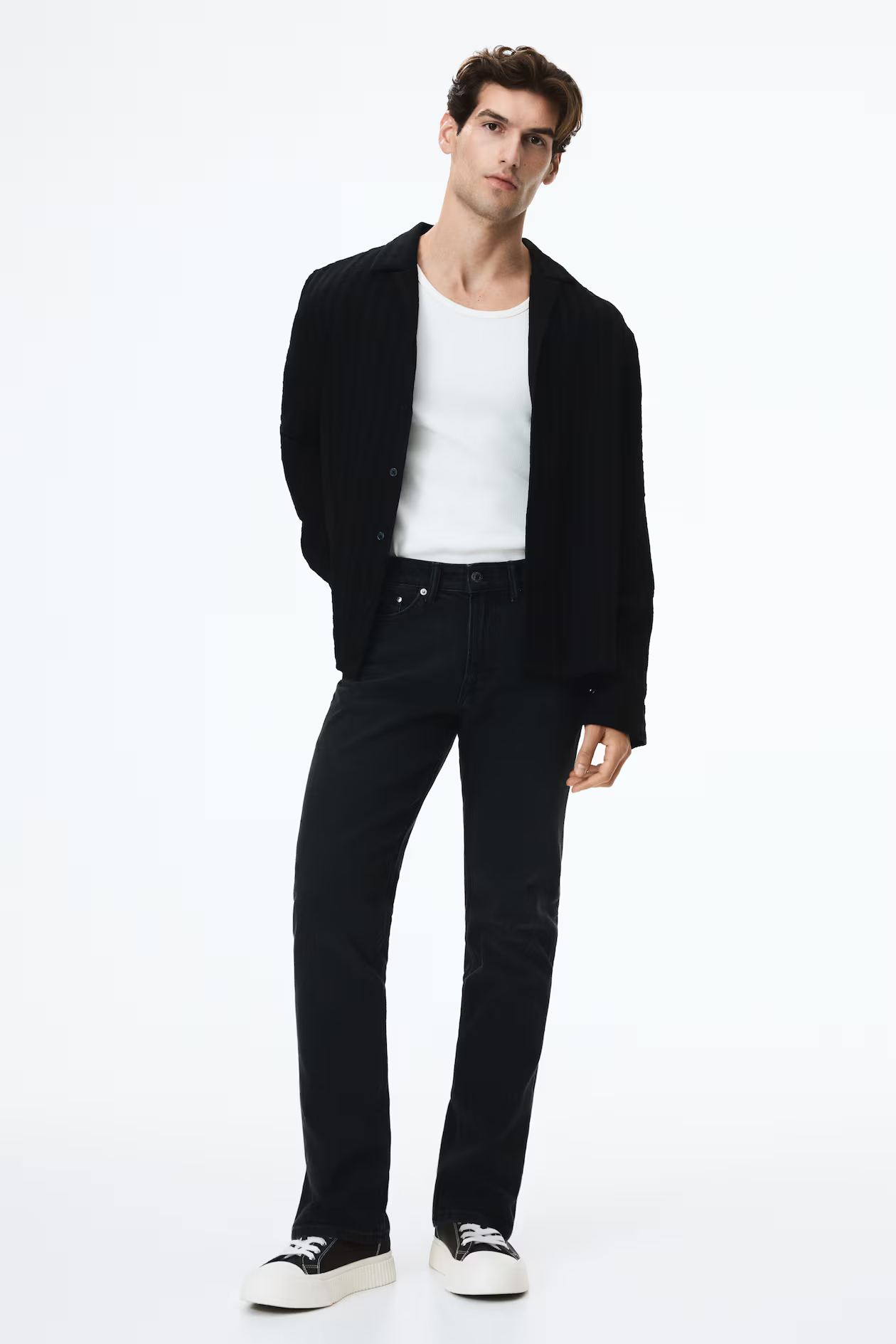
Why Your Black Jeans Always Fade (And What Actually Fixes It)
You bought the perfect pair of black jeans. Deep, rich, inky black. They looked incredible with everything — a white tee, a formal shirt, a kurta. And then, somewhere around the third or fourth month of regular wear and washing, you noticed it. That flat, lifeless grey creeping in.
It's not just you. It happens to almost every pair of black jeans on the market. And the frustrating part? No amount of careful washing, inside-out drying, or cold water cycles fully prevents it. Here's why — and what the only real fix actually is.
The Chemistry Behind Why Black Jeans Fade
Most black denim is dyed using sulphur-based dyes. Unlike the indigo used for blue jeans — which is woven into the fibre — sulphur dye sits on the outer surface of the cotton fibres. It bonds to the fabric during dyeing, but that bond is inherently vulnerable to three forces that are impossible to avoid in daily life:
• Friction — every time you sit, walk, or move, fabric fibres rub against each other. This physically scrapes the dye from the surface of the cotton.
• Water — washing opens cotton fibres slightly, and with each wash cycle, loosely bonded dye molecules wash out with the water.
• UV Light — sunlight is highly effective at breaking down organic dye molecules. Even drying your jeans outside accelerates fading significantly.
The result is that standard black denim doesn't so much fade as it erodes — wash by wash, wear by wear, the dye that was sitting on the surface simply disappears. By the time your jeans look grey, you've lost a significant portion of the original dye load.
Why 'Washing Tips' Don't Fully Solve It
You'll find dozens of articles advising you to wash black jeans inside out, use cold water, skip the tumble dryer, and add a tablespoon of white vinegar to the rinse cycle. Does any of this work?
Partially, yes. Cold water causes less fibre swelling than hot, so slightly less dye escapes per wash. Washing inside out reduces friction on the outer face of the fabric. These measures slow the process — but they don't stop it, because the fundamental problem is that the dye was never deeply bonded to the fibre in the first place.
It's like applying sunscreen over a shallow wound. You can slow the damage, but the underlying vulnerability is still there.
The Only Real Fix: Colour-Lock Technology
The permanent solution isn't about how you wash your jeans. It's about how the denim is dyed before it ever reaches you.
Advanced colour-lock denim uses a deep-bond dyeing process in which the black pigment is chemically bonded at the molecular level into the cotton fibre itself — not just coated onto the surface. This means:
• The dye cannot be mechanically scraped off by friction
• The dye does not leach out into wash water
• The dye is significantly more resistant to UV degradation
The result is a pair of jeans that genuinely stays black — not just for the first few washes, but for the fiftieth.
How BLAKC Is Different
BLAKC wasn't built as a general clothing brand that happens to sell black jeans. The entire brand was built around one core promise: black that never fades. Every product in the BLAKC range — from jeans to t-shirts — uses the same colour-lock denim technology.
We didn't just claim it. We tested it. In a 180-day side-by-side comparison of BLAKC jeans versus standard black denim through identical wash cycles, the difference is visible and significant. Both pairs washed in identical conditions, same number of times, same temperature. One pair stayed black. The other didn't.
You can see the comparison on the BLAKC product page — there's a before/after slider so you can see the result yourself rather than taking our word for it.
What to Look For When Buying No Fade Black Jeans
Not all anti-fade claims are equal. Some brands use the phrase 'colour fast' loosely on packaging without it meaning much in practice. Here's what to actually check:
1. Look for brands that specify deep-bond or colour-lock dyeing — not just 'dark wash' or 'raw black'.
2. Check if there's documented wash testing — any brand serious about fade resistance will have tested and shown results.
3. Read reviews specifically mentioning colour retention after multiple washes — not just fit and comfort.
4. Be wary of brands that give extensive washing instructions as a substitute for good dye quality.
The Bottom Line
Black jeans fade because of sulphur-based surface dyeing combined with the unavoidable realities of friction, water, and UV. Washing tips slow the process but cannot stop it. The only permanent solution is a denim that uses a deeper, stronger colour-bonding process from the start.
If you're tired of replacing black jeans every six months, or watching your wardrobe slowly turn grey, it's worth investing once in a pair that's built to stay black.
BLAKC makes the only black jeans in India built entirely around this technology. Shop the Men's and Women's No Fade Black Jeans — and stop replacing jeans that shouldn't be fading in the first place.
→ Shop No Fade Black Jeans for Men: blakc.store/products/no-fade-black-jeans-men
→ Shop No Fade Black Jeans for Women: blakc.store/products/no-fade-black-jeans-women

Leave a comment
This site is protected by hCaptcha and the hCaptcha Privacy Policy and Terms of Service apply.